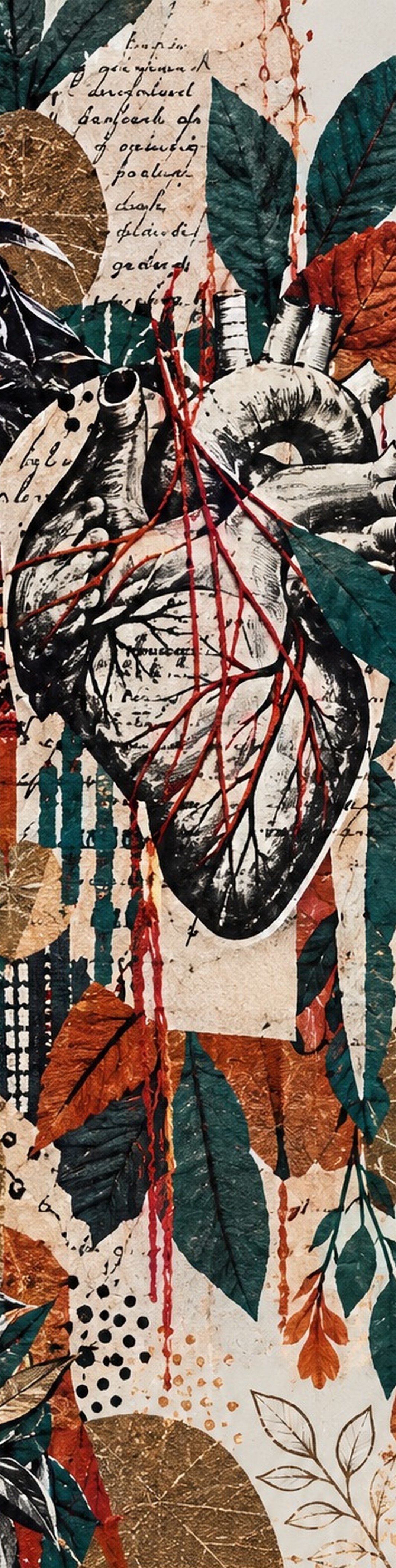
How do bodies, practices, and territories bear witness to histories of violence and displacement while opening possibilities for care and other forms of relationality? What happens when memory transcends the boundaries of conventional archives?
Embodied Archives of Memory brings together artists and scholars to explore how memory is preserved, transmitted, and transformed through embodied, sensory, and material practices. Drawing on diverse philosophical approaches, collaborative artistic creation, and Indigenous textile practices, the symposium examines how bodies and artistic practices become spaces of testimony, knowledge, and resistance.
Through distinct embodied practices—listening; kipará, Emberá body painting; and witral, Mapuche weaving—the symposium invites participants to reconsider what constitutes an archive, how testimonies become legible, and which memories are activated, made audible, and preserved.
ListeningMaking the unheard audible
KiparáEmberá body painting
WitralMapuche weaving
Program
Symposium schedule, Wednesday, November 18, 2026
9:00–9:10 AM
Welcome and IntroductionJohanna Nieto-Rojas
9:10–9:55 AM
María del Rosario Acosta LópezProfessor, Department of Hispanic Studies, UC Riverside
9:55–10:40 AM
Carolina Pinzón RiveraVisual Artist, M.A. in Art in Context, Bogotá
10:40–11:00 AM
Coffee Break
11:00–11:45 AM
Antonio CatrileoPhD Candidate, Ethnic Studies, UC San Diego
11:45 AM–12:20 PM
Collective Conversation and Audience Q&ADiscussant: Iván Eusebio Aguirre Darancou
12:20–12:30 PM
Closing Reflections and AcknowledgmentsJohanna Nieto-Rojas
Featured Speakers
María del Rosario Acosta López
Professor, Department of Hispanic Studies, UC Riverside
María del Rosario Acosta López is a Colombian philosopher whose research brings together philosophical aesthetics, critical theory, political philosophy, and decolonial approaches to memory and trauma. Her work has involved collaborations with survivors of political violence in Colombia and police torture in Chicago. She is the author of Gramáticas de la escucha: hacer audible lo inaudito (Herder, 2026), which examines the conditions under which experiences of violence and trauma can become audible.
Carolina Pinzón Rivera
Visual Artist, M.A. in Art in Context Bogotá, Colombia
Carolina Pinzón Rivera is a Colombian visual artist whose socially engaged practice combines artistic research, education, and collaborative work with communities. She holds an M.A. in Art in Context from the Berlin University of the Arts and has developed artistic and educational initiatives with Colombia’s National Center for Historical Memory. She has also served as a museology advisor at the National Museum of Colombia. Her projects and publications include the artist book Dai Werakaura – Brave Women (2024).
Mapuche-Chilean Artist, Educator, and Scholar PhD Candidate, Ethnic Studies, UC San Diego
Antonio Catrileo is a Mapuche-Chilean educator, artist, and PhD candidate in Ethnic Studies with a specialization in Critical Gender Studies at UC San Diego. Their research focuses on non-normative genders and sexualities in Abiayala, exploring critical juxtapositions between Latin American sexual dissidence activisms and cultural productions, trans/travesti epistemologies, indigeneity, and incommensurability as forms of embodied knowledge. They are also a member of Comunidad Catrileo+Carrión, an artistic collective that develops collaborative and community art projects exploring experimental audiovisual languages, installation, and performance.